
When choosing wood furniture, most homeowners consider three things: durability, grain pattern, and color. Different types of woods make different visual statements. Some develop richer color over time, while others remain more consistent. The best choice often depends on both your style and how the furniture will be used. As you compare wood types and species, keep these factors in mind.
Amish furniture can be daunting because of the many choices. While our website boasts of hundreds of different styles, the Amish specialize in crafting custom furniture. If you’re hoping to design your own furniture, you may want to know which advantages each wood species offers and which are common among Amish furniture wood types.
The Best Types of Wood for Your Home
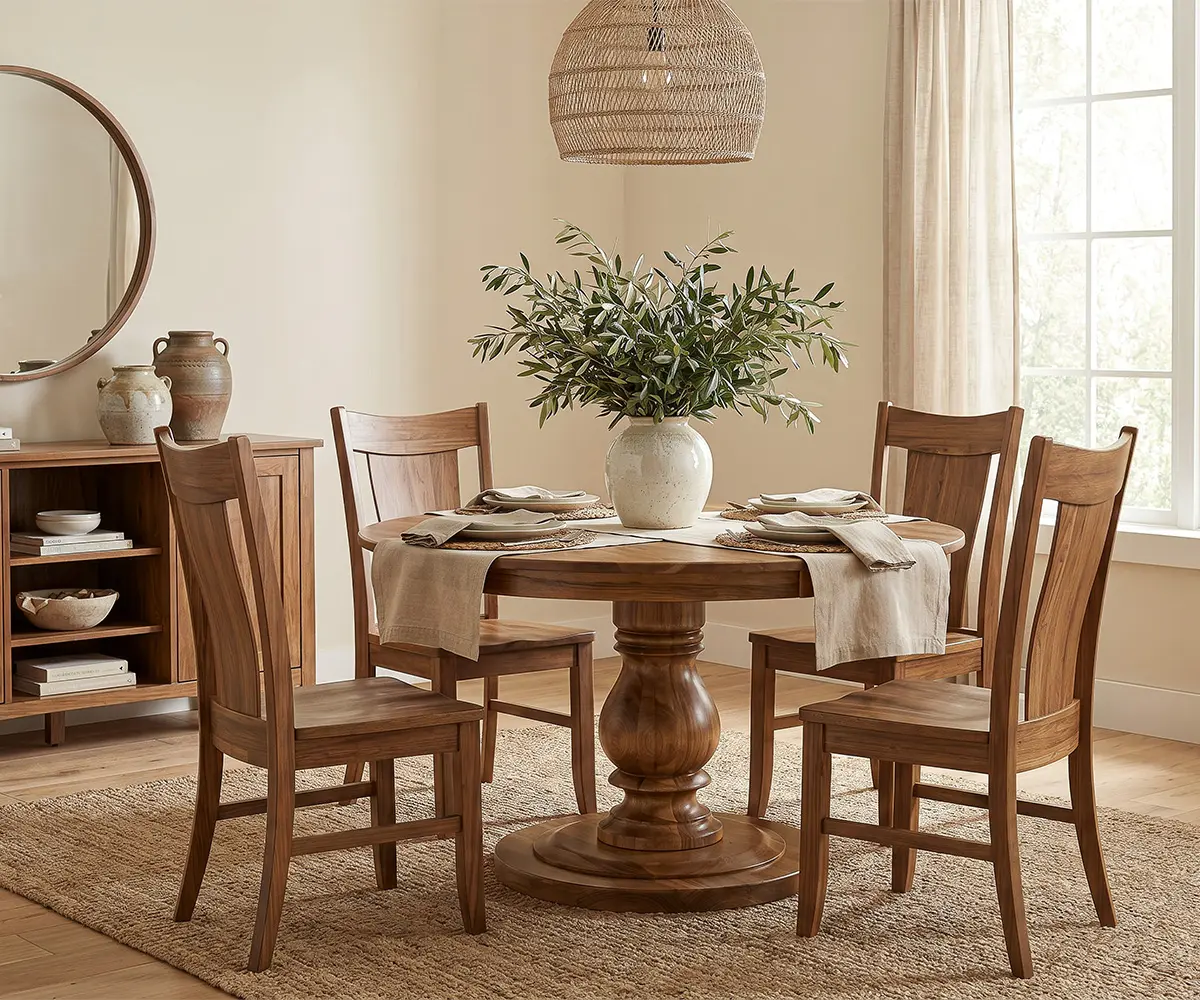
It’s important to consider how your family functions. Do you host many guests? Is your living room a high-traffic area, or a comfortable space for quiet activities? Does your furniture need to withstand heavy wear and tear, or will it be used mainly for gentle use? Do you have pets? And finally, how long do you want your furniture to last? All Amish furniture is made from solid wood to last for a lifetime, but the harder the wood, the longer that lifetime is.
Oak: Classic for a Reason
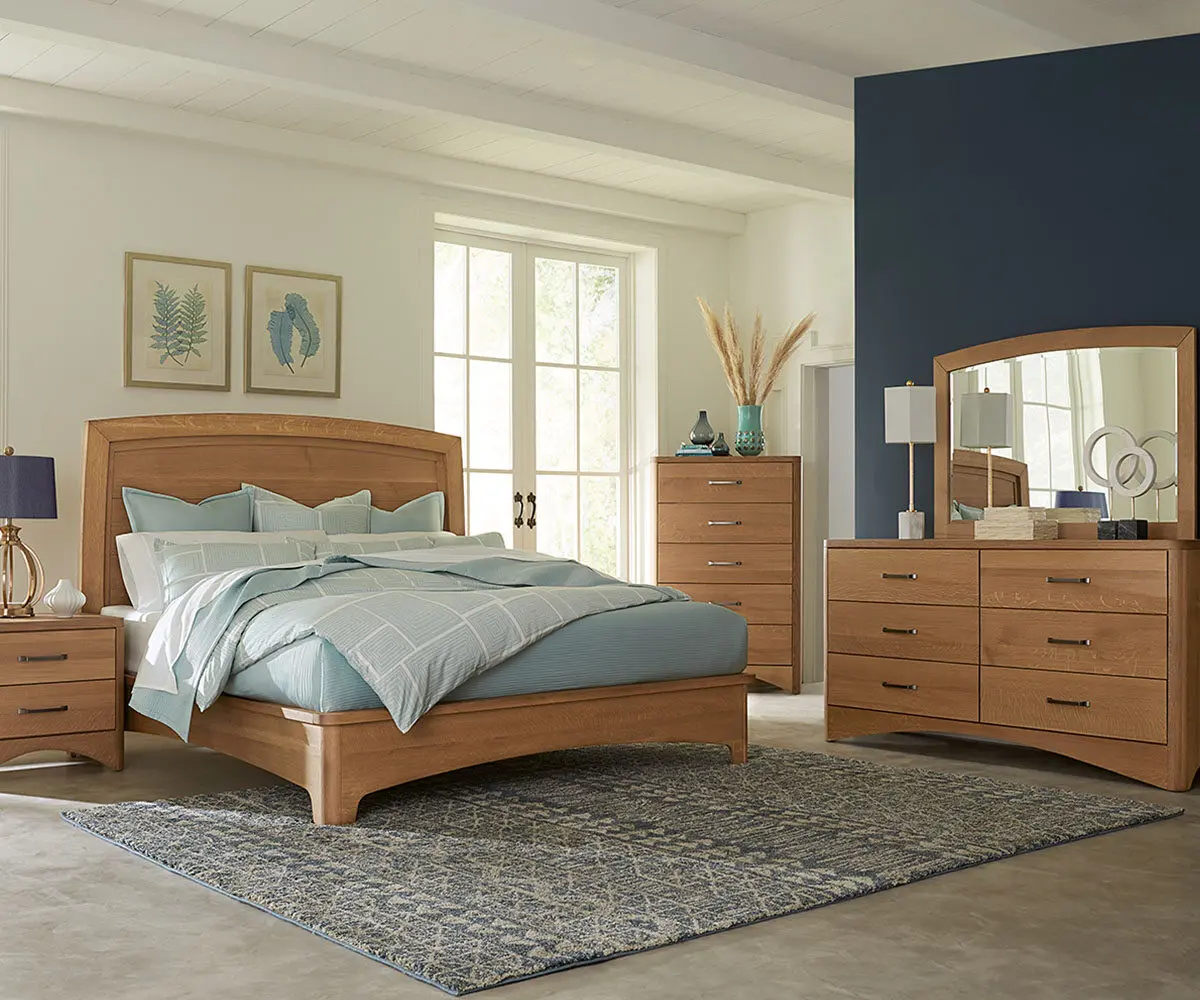
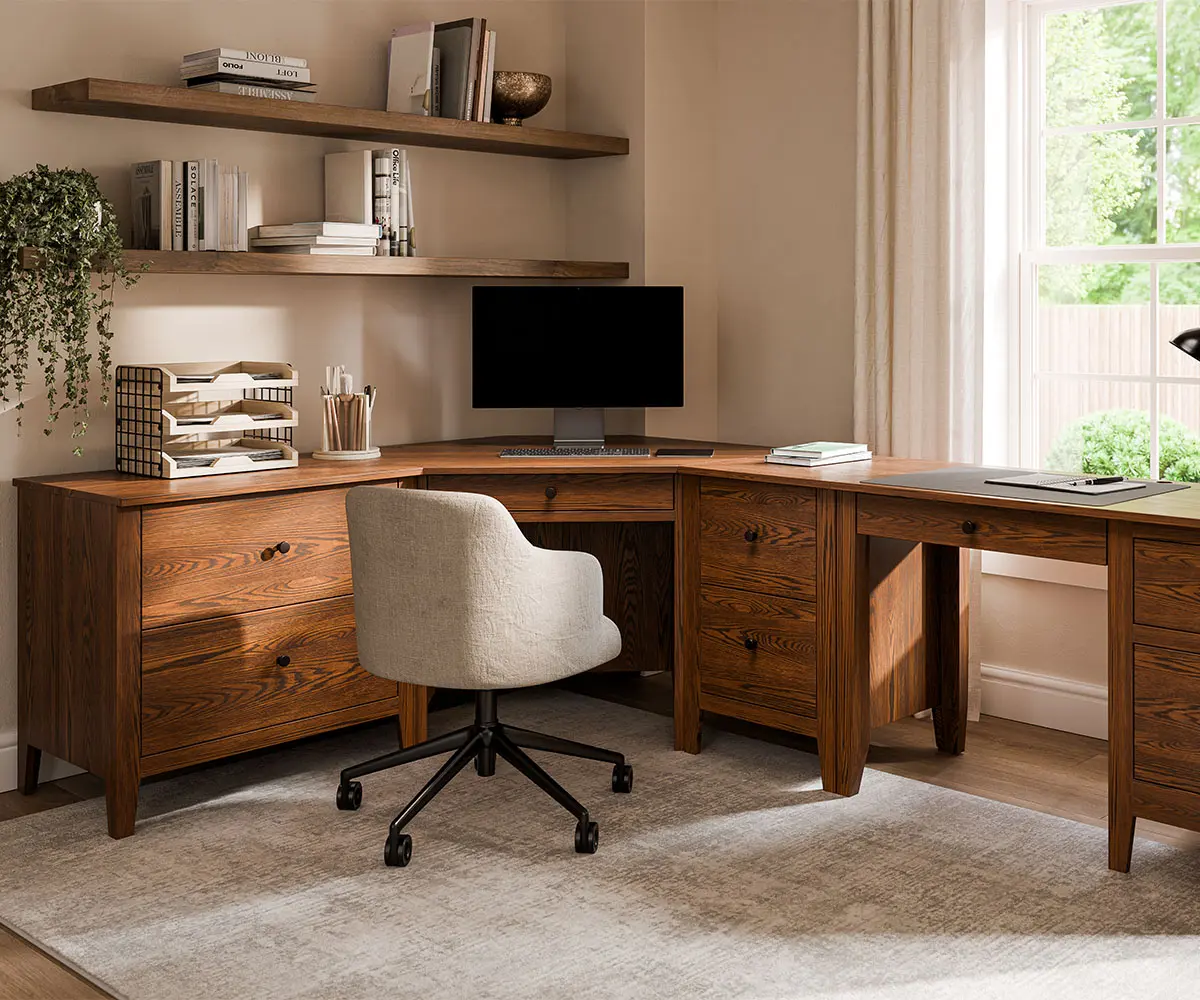
Oak has long represented strength, endurance, and longevity. Its visible grain gives each piece of furniture a distinct look, which helps solid wood furniture feel more natural and less manufactured.
Oak also performs well in high-traffic areas such as dining rooms, entryways, and children’s bedrooms. The grain helps to hide temporary smudges and dirt. It rarely dents, meaning it will withstand even children’s exuberant play. Its durability makes it one of the most practical choices for everyday furniture.
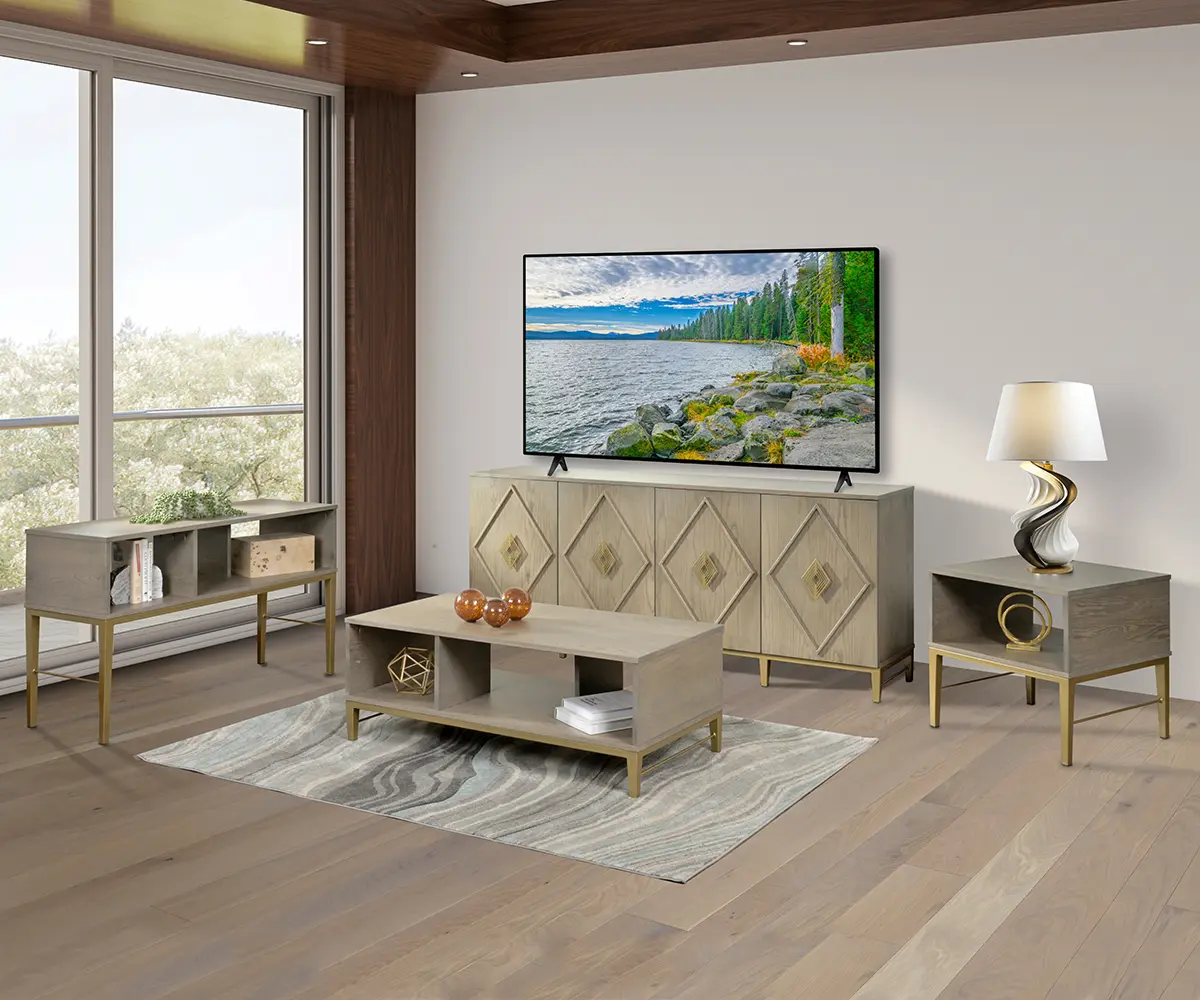
Amish craftsmen commonly use both red oak and white oak. Red oak has a warmer undertone with hints of pink, while white oak tends to look more neutral. Quarter-sawn white oak remains especially popular because of its medullary rays, sometimes called “tiger stripes,” which create striking patterns across the wood.
Mission furniture often features oak because the style emphasizes craftsmanship and natural materials. However, oak works well across many styles, from traditional furniture to mid-century modern pieces. Today, lighter stains have become increasingly popular, especially on white oak.
 Light Stain
Downplays the grain
 Medium Stain
Highlights the grain
 Dark Stain
Provides contrast
Cherry: Wood That Ages Well
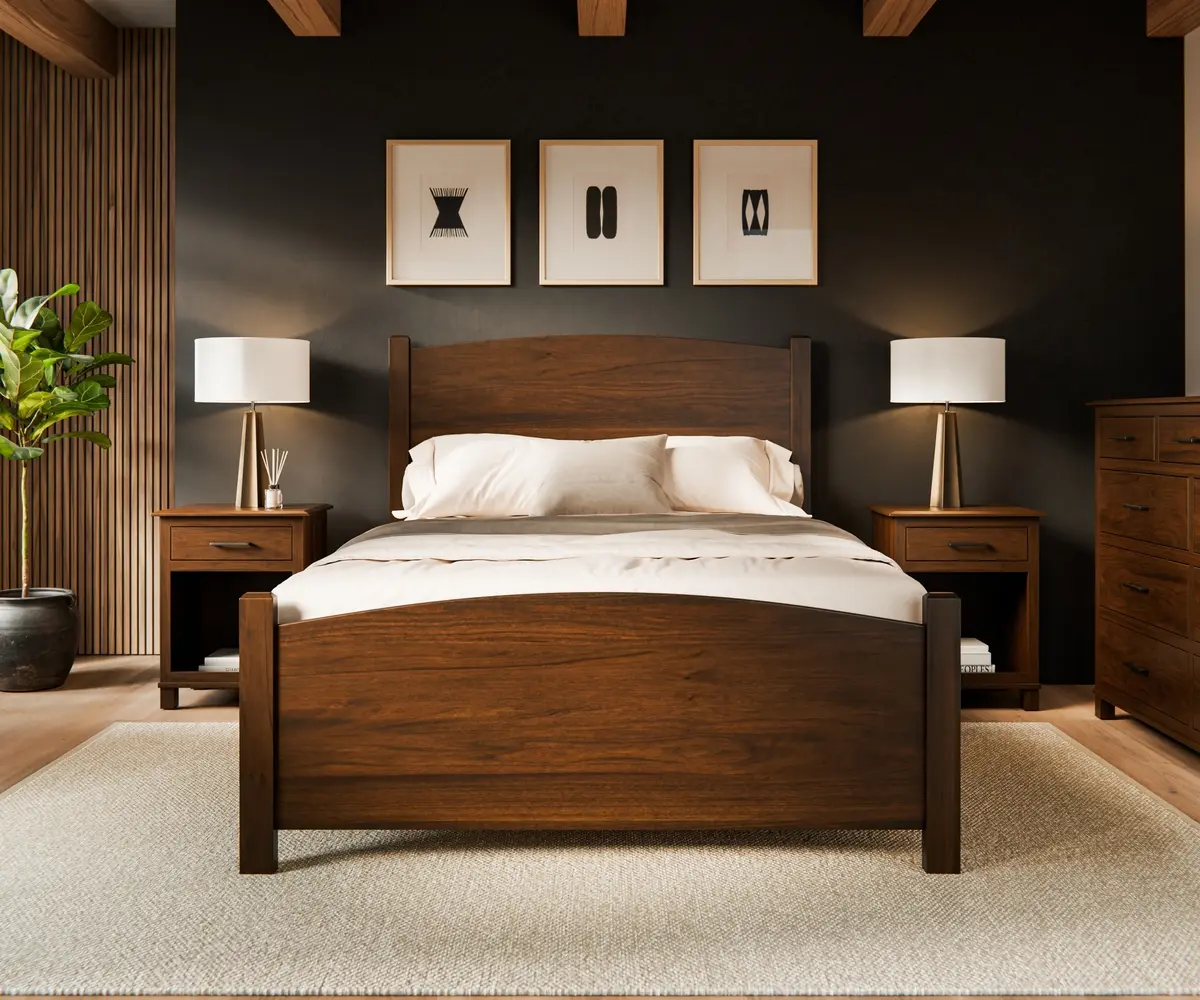
Cherry has remained popular for generations because of the way it ages. Over time, its red undertones deepen and develop a richer patina, especially if exposed to sunlight. For some, this is their favorite feature, while others may dislike the thought of the color changing.
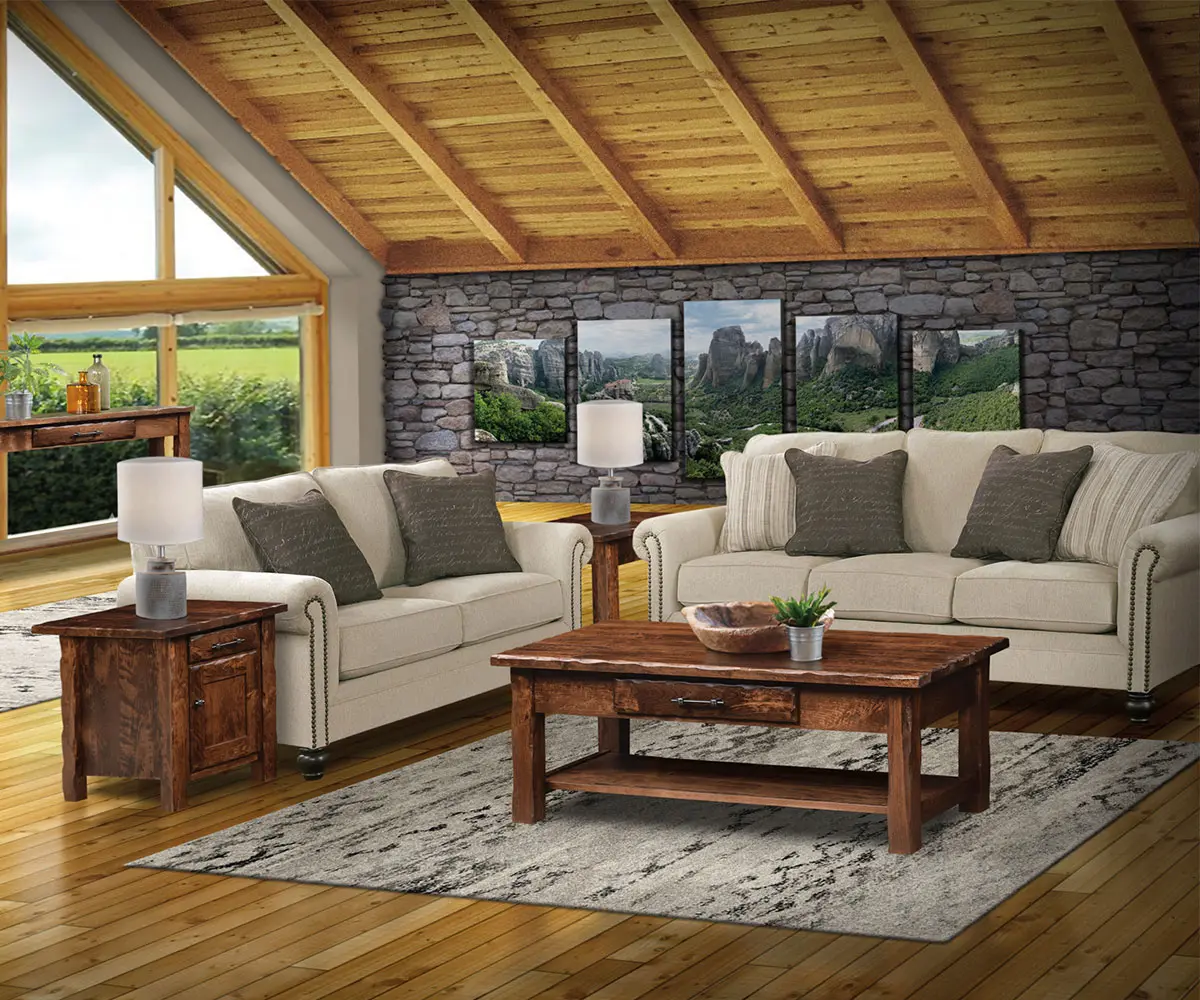
Although cherry is slightly softer than oak or maple, it still performs well for many household furniture pieces. It works especially well in bedrooms, offices, and formal dining rooms, where people often appreciate its warmth and rich color.
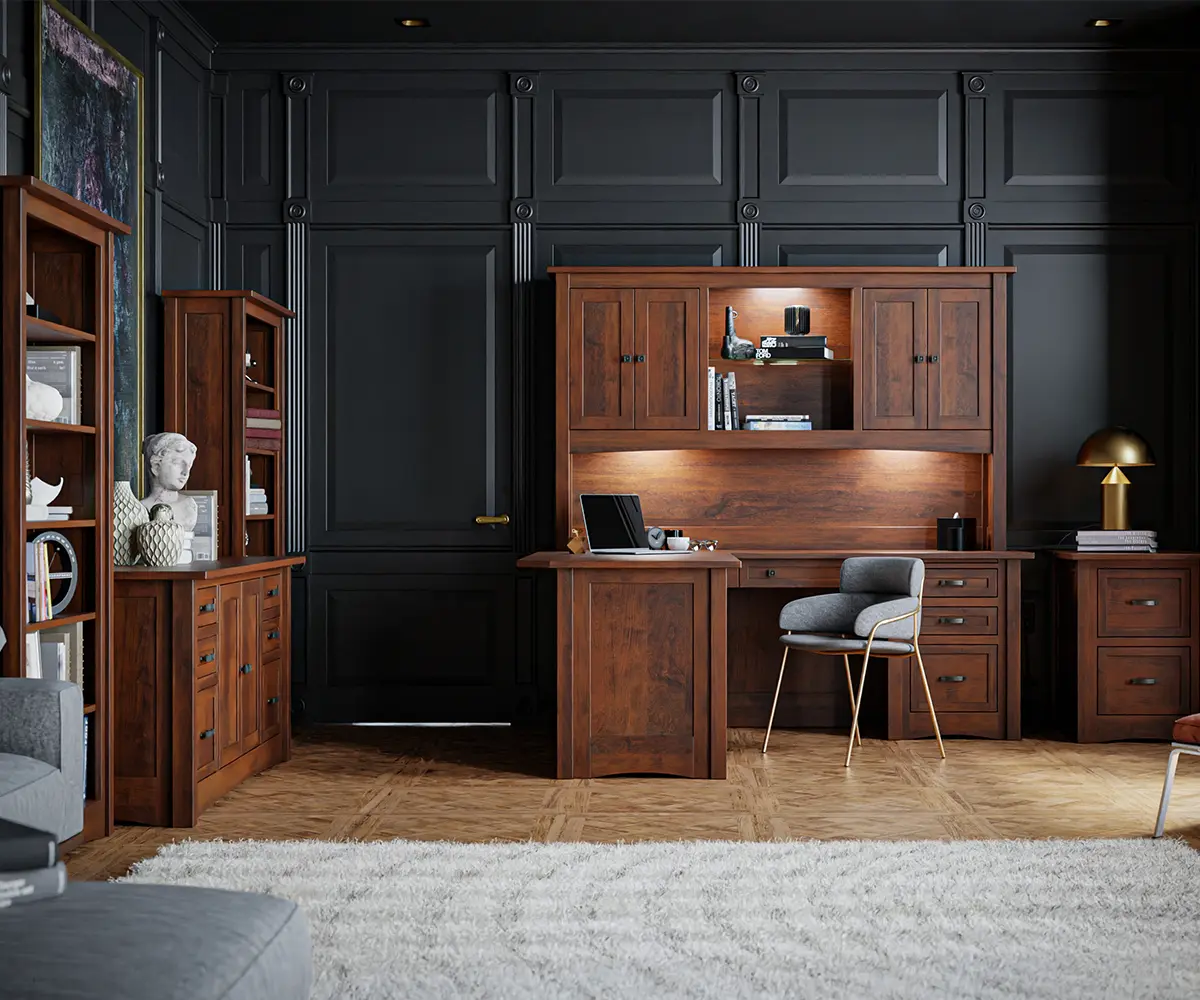
Unlike oak, cherry’s appeal comes more from its color than from dramatic grain patterns. Its grain tends to appear softer and more subtle, though certain cuts can create swirling patterns that add character.
Cherry also stains well, particularly with darker finishes. Because of this flexibility, cherry furniture fits a wide range of interiors, from traditional spaces to more transitional designs.
 Light Stain
Highlights the grain, not the color
 Medium Stain
Brings out a rich, red color
 Dark Stain
Provides an understated elegance
Maple: A Versatile Choice
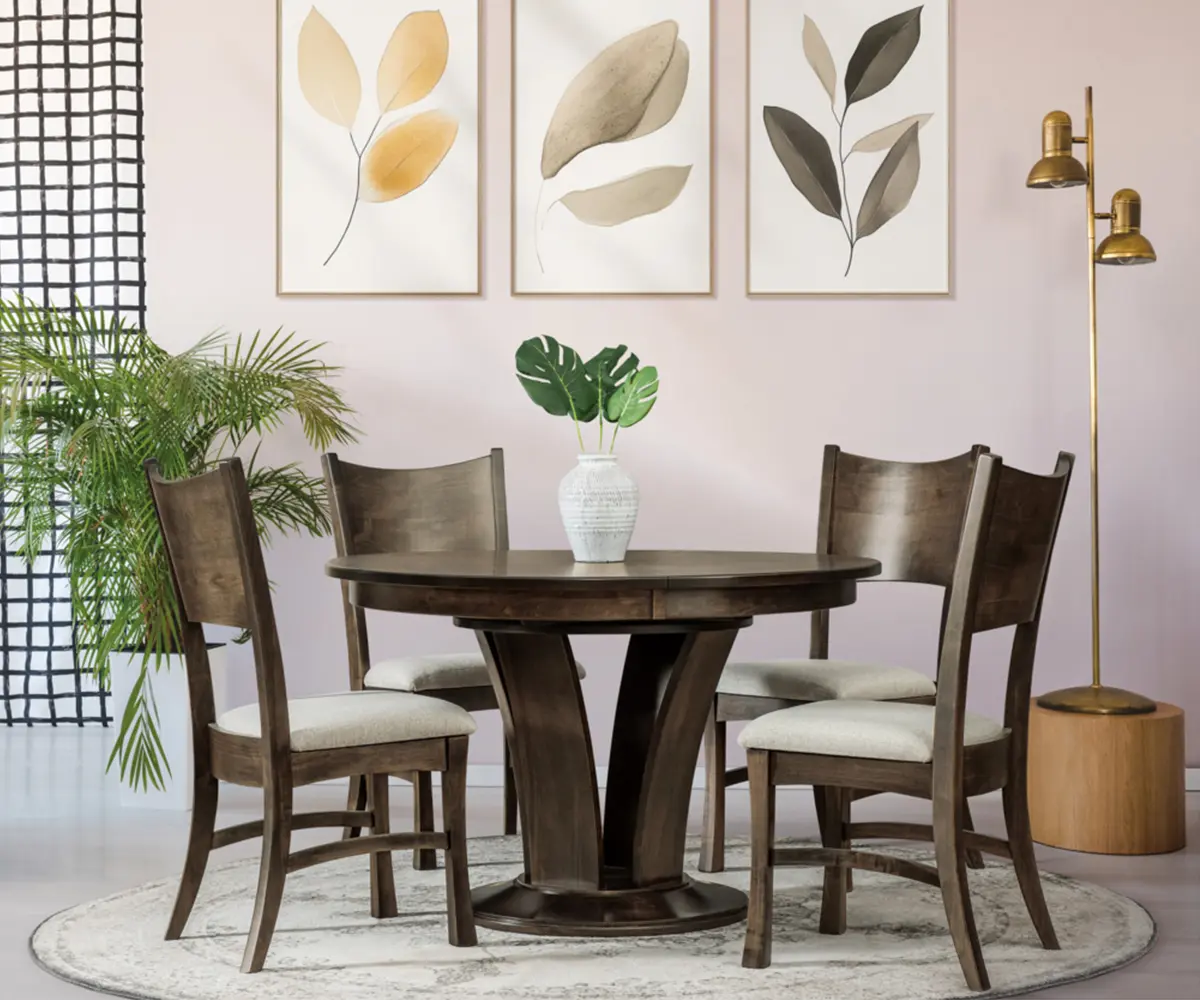
Maple has become increasingly popular in recent years. As maple forests continue to expand across parts of the eastern United States, the wood remains widely available and adaptable for many furniture styles.
Amish craftsmen typically work with either hard maple or brown maple. Hard maple ranks among the harder domestic hardwoods and resists dents well. Brown maple is slightly softer and often shows greater color and grain variation.
Maple's grain pattern is often subtle, giving it a smoother, more uniform appearance than oak or hickory. This means it will be less visually busy, resulting in a sleeker look. It also means it's great at coordinating with painted oak cabinetry and a variety of busier styles. For homeowners who prefer furniture with a quieter grain pattern, maple offers a good alternative.
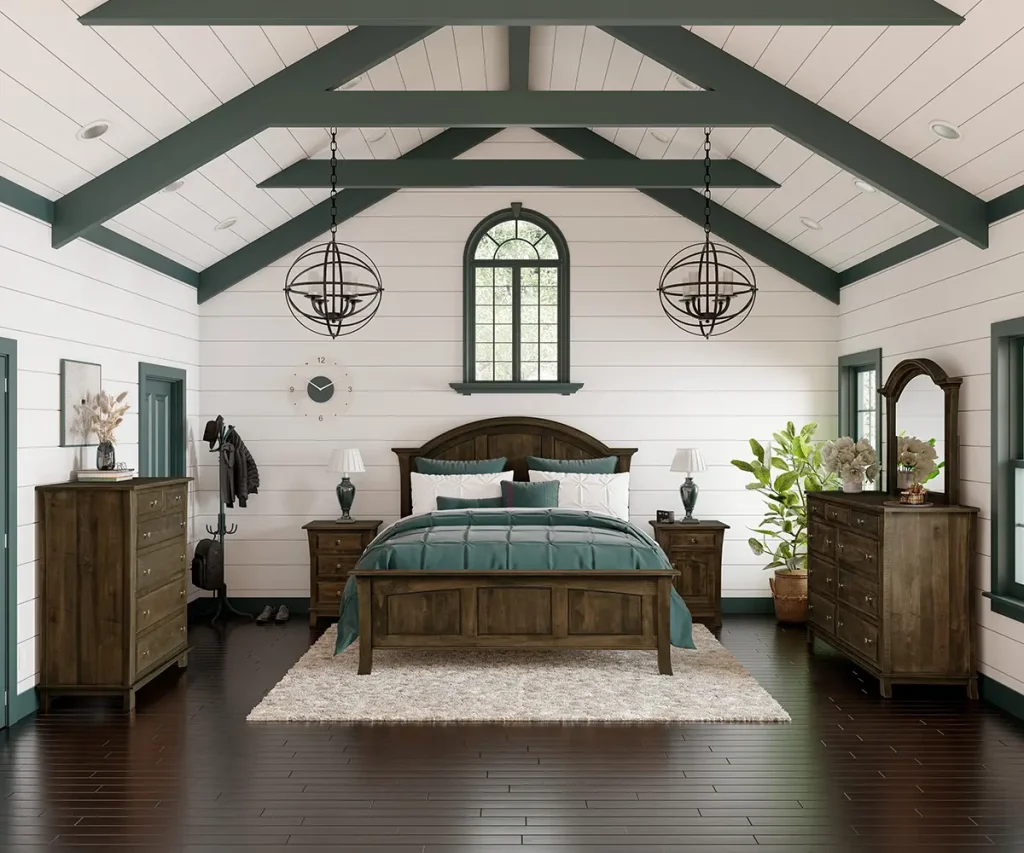
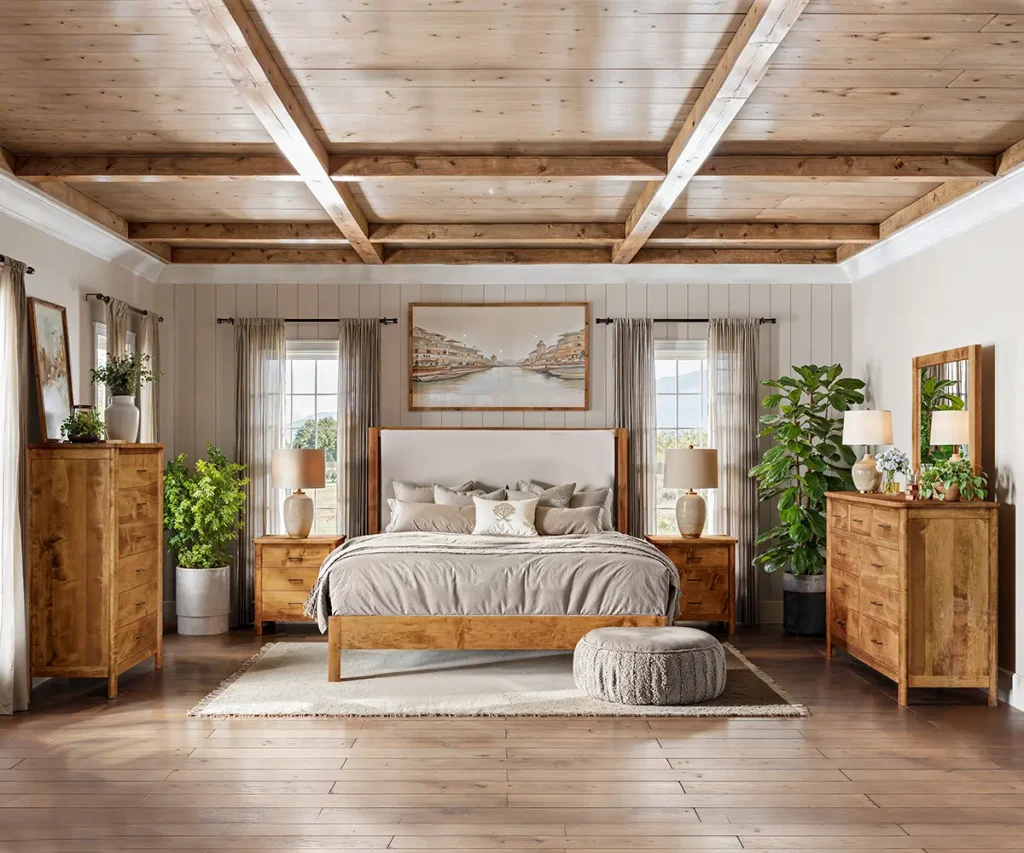
Maple also takes stain exceptionally well. It works with both light and dark finishes, which makes it one of the most flexible choices for custom furniture.
 Light Stain
Neutral, Scandinavian look
 Medium Stain
Perfect for mid-century modern
 Dark Stain
Brings drama and warmth
Hickory: The Heirloom Choice
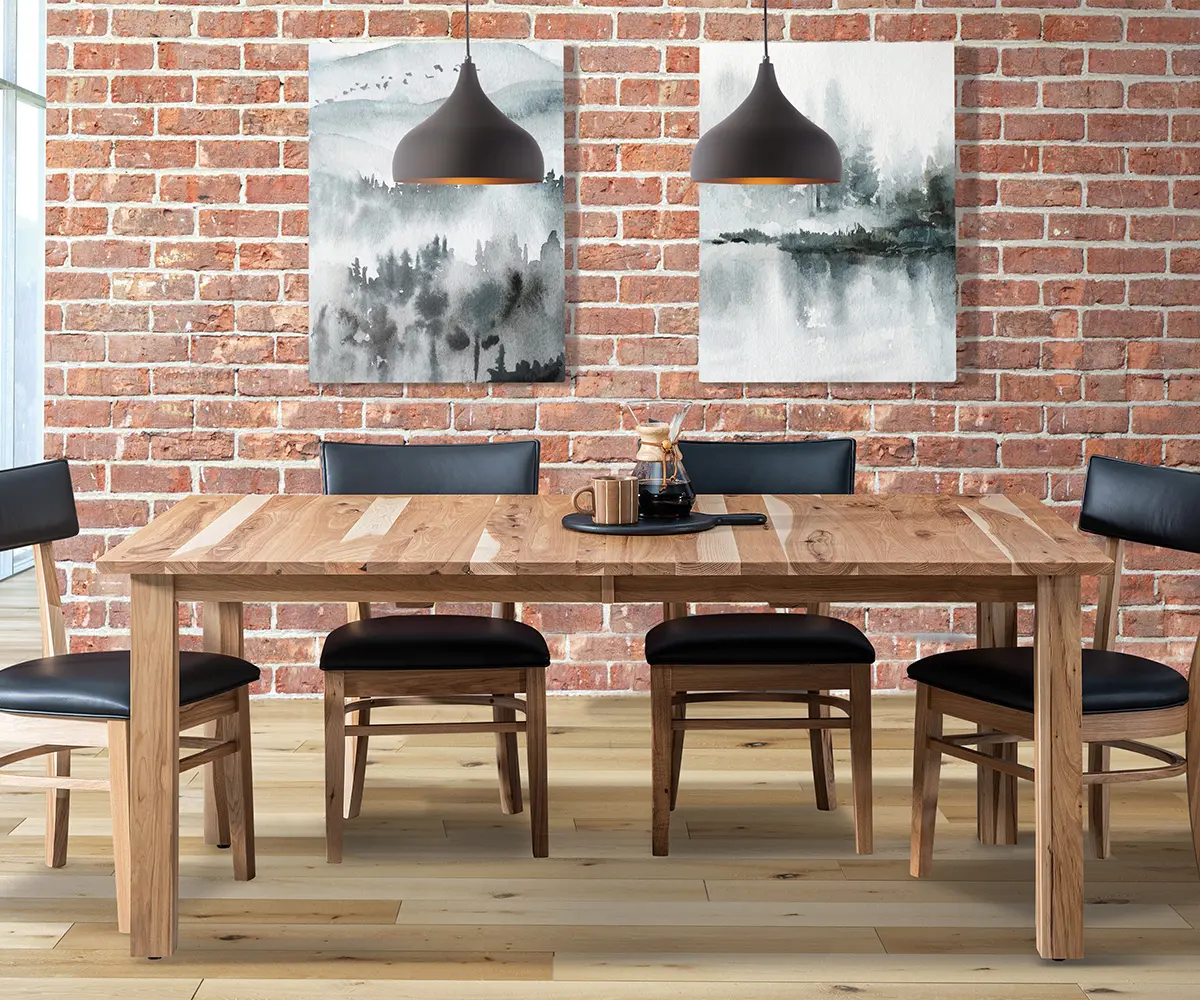
For homeowners who want furniture with strong character, hickory stands apart. Hickory ranks among the hardest domestic wood species used in furniture making, making it exceptionally durable.
Its hardness also affects the way craftsmen work with it. Instead of forcing every board into uniform patterns, woodworkers often let the wood's natural character guide the finished piece. As a result, hickory furniture often has a more distinctive appearance. Its dramatic variation means no pieces are alike.
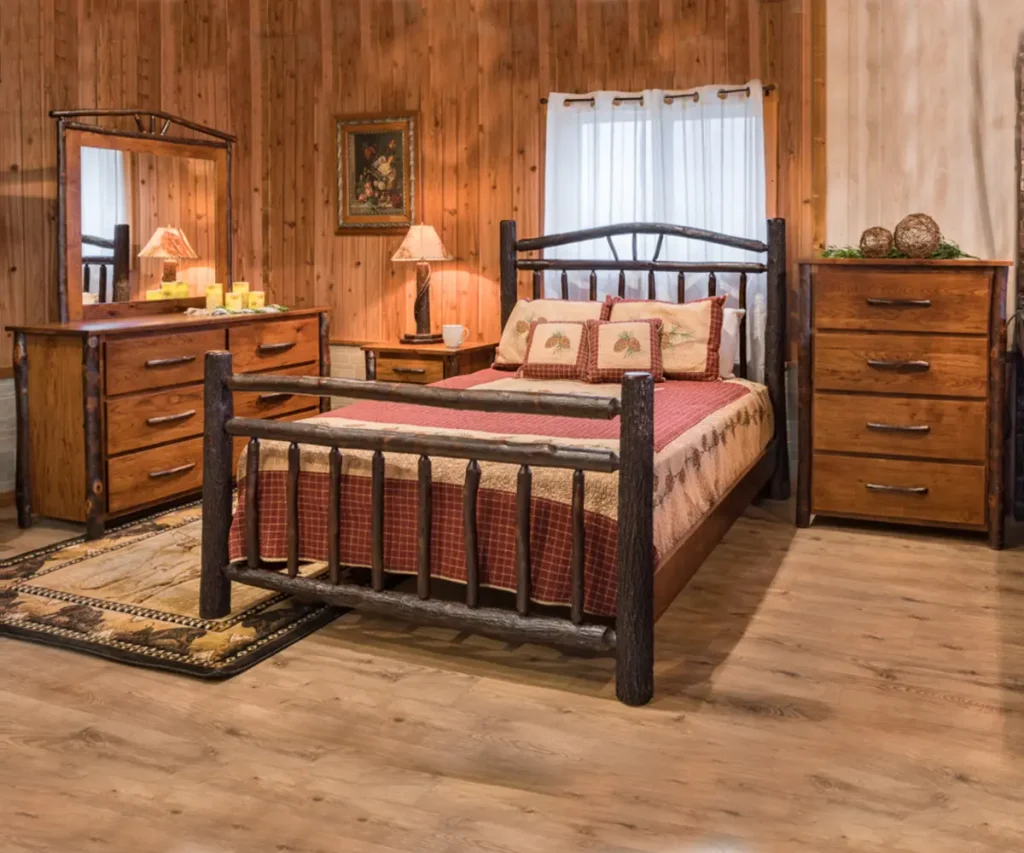
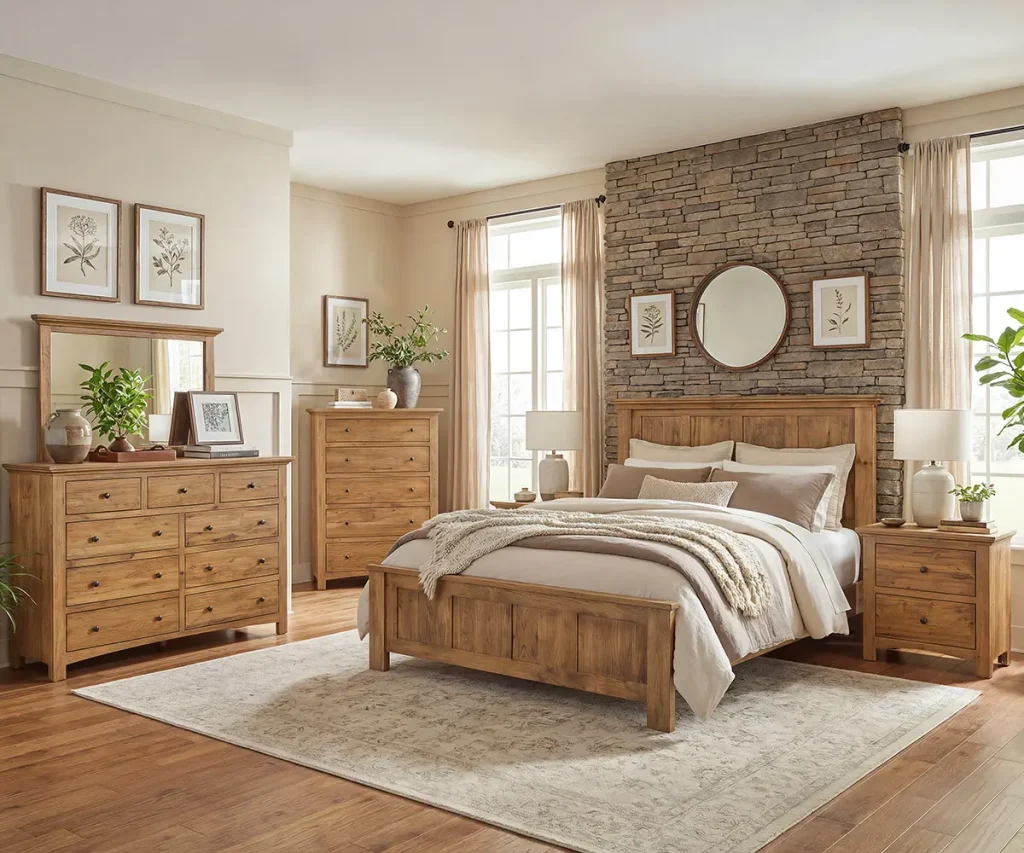
Hickory's grain is bold and varied. Unlike oak, which tends to display more regular grain patterns, hickory often contains knots, color variation, and unpredictable markings. Those natural features give each piece a distinct look. If you like texture and movement, hickory is perfect.
Because of its rugged appearance, hickory fits especially well in cabins, lodges, and homes with rustic design elements. It pairs well not only with less visually visible wood grains but also with leather, stone, and textured fabrics.
 Light Stain
Lends a “soft” look
 Medium Stain
Highlights contrasts
 Dark Stain
Brings an “heirloom quality” look
Conclusion
The best wood choice depends on how you want your furniture to feel in your home. Some homeowners prefer oak's grain and durability, while others prefer cherry's depth of color or maple's versatility. Understanding the character of each wood species can help you choose furniture that fits both your style and your way of life.